


This very day, a informal Group of the Willing, mostly made up of European officials, convened in the French capital with envoys of US President Donald Trump, hoping to make further headway on a sustainable peace agreement for Ukraine.
With Ukraine's President Volodymyr Zelensky insisting that a plan to halt the hostilities with Russia is "90% of the way there", nobody in that room wished to jeopardise keeping the US involved.
Yet, there was an immense elephant in the room in that impressive and sparkling summit, and the fundamental atmosphere was extremely tense.
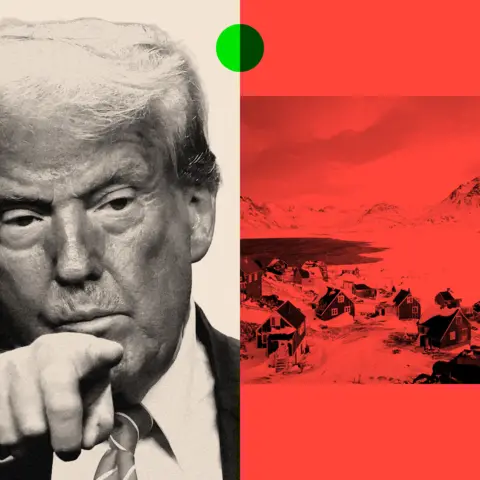
Recall the actions of the last few days: the US administration's contentious incursion in the South American nation and the President Trump's assertion shortly thereafter, that "it is essential to have Greenland from the standpoint of strategic interests".
Greenland is the world's largest island – it's sixfold the size of Germany. It lies in the Arctic but is an self-governing possession of Denmark's.
At the Paris meeting, Mette Frederiksen, Denmark's Prime Minister, was sitting across from two powerful figures representing Trump: special envoy Steve Witkoff and Trump's relative Jared Kushner.
She was under pressure from her EU allies to avoid provoking the US over Greenland, for fear that that affects US support for the Ukrainian cause.
EU heads of state would have much rather to keep Greenland and the debate on the war apart. But with the diplomatic heat mounting from Washington and Copenhagen, representatives of major EU countries at the talks put out a communiqué saying: "The island is part of the alliance. Stability in the Arctic must therefore be attained collectively, in partnership with NATO allies like the United States".
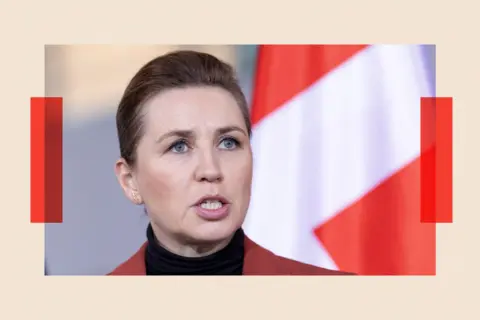
"The decision is for Copenhagen and the Greenlandic authorities, and no one else, to rule on affairs related to Denmark and Greenland," the declaration further stated.
The communique was greeted by Greenland's prime minister, Jens Frederik Nielsen, but analysts contend it was delayed to be drafted and, owing to the restricted group of supporters to the declaration, it was unable to project a Europe aligned in objective.
"If there had been a joint declaration from all 27 EU partners, plus alliance partner the UK, in support of Danish control, that would have conveyed a resounding message to the US," stated a EU foreign policy specialist.
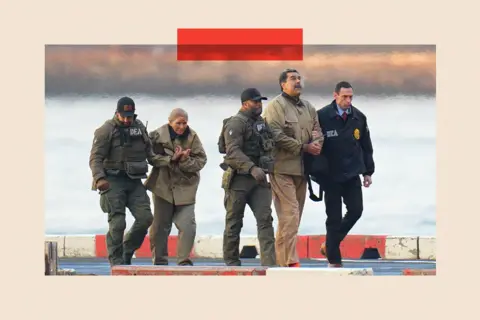
Consider the irony at hand at the Paris summit. Several EU government and other officials, including the alliance and the European Union, are attempting to involve the US administration in safeguarding the future independence of a EU nation (Ukraine) against the hostile territorial ambitions of an foreign power (Moscow), on the heels of the US has intervened in sovereign Venezuela by armed intervention, taking its president into custody, while also persistently publicly threatening the sovereignty of a further EU member (the Kingdom of Denmark).
To add to the complexity – Denmark and the US are both participants of the military bloc the North Atlantic Treaty Organization. They are, in the view of Danish officials, profoundly close allies. At least, they were.
The dilemma is, should Trump fulfill his goal to acquire Greenland, would it constitute not just an fundamental challenge to the alliance but also a major problem for the European Union?
Europe Faces the Danger of Being Overlooked
This is not the first time President Trump has voiced his intention to acquire the Arctic island. He's suggested acquiring it in the past. He's also refused to rule out a military seizure.
On Sunday that the landmass is "so strategic right now, Greenland is frequented by foreign naval assets all over the place. We need Greenland from the vantage point of national security and Denmark is incapable to do it".
Denmark contests that assertion. It not long ago committed to spend $4bn in the island's defense including boats, drones and aircraft.
Under a mutual pact, the US operates a strategic outpost already on the island – founded at the onset of the East-West standoff. It has scaled down the total of personnel there from around 10,000 during the height of Cold War operations to approximately 200 and the US has often been faulted of neglecting polar defense, up to this point.
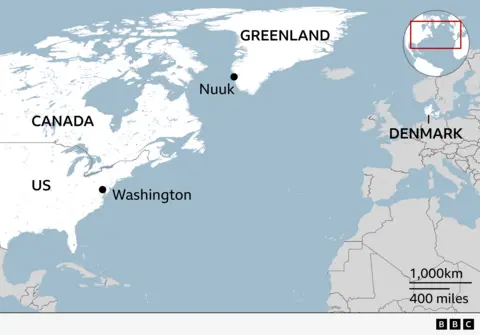
Copenhagen has indicated it is willing to talk about a expanded US footprint on the island and more but confronted by the US President's warning of unilateral action, Frederiksen said on Monday that the US leader's goal to take Greenland should be considered a real possibility.
Following the Washington's moves in Venezuela this weekend, her colleges in Europe are doing just that.
"These developments has just underlined – once again – Europe's core vulnerability {


